

Research in Morgan MO
Get a clear, local view of the used car landscape with our used car market research for Morgan MO. Whether you live in Versailles, Stover, or near the Lake of the Ozarks, this guide explains how supply, demand, seasonality, and vehicle condition shape pricing across Morgan County. Learn how to compare listings, read vehicle histories, and spot fair prices for sedans, SUVs, and trucks. We share methods to evaluate mileage, ownership records, and reconditioning, plus tips to estimate total cost of ownership. Use this page as your reference for Morgan County used car trends, price influences, and smart buying steps. Explore related research for nearby counties, review real world sold examples, and keep learning with our car buying resources. This page supports shoppers at every stage with practical insights you can put to work today.
Use this Morgan MO market guide alongside current listings, recent sales, and your budget to confirm a confident decision. Compare comp vehicles in our sold inventory, track availability in our used inventory, and explore deeper how to evaluate features and ownership costs in our blog and car buying guides. Questions are always welcome through our contact page.
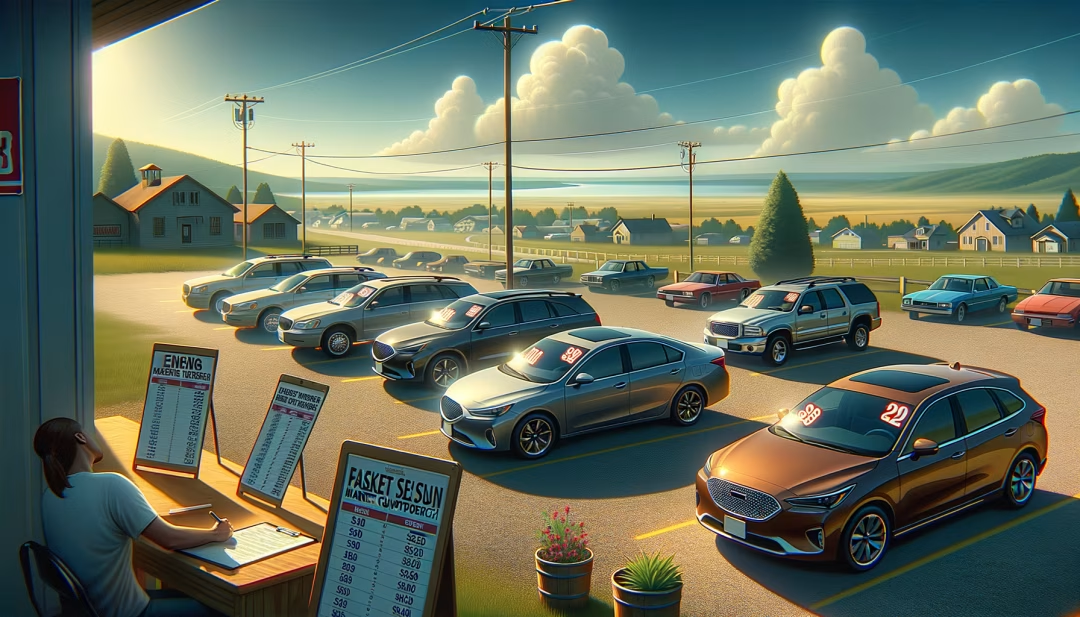
Why Morgan MO Market Research Matters
Every county has its own rhythm in the used car market. Morgan County, shaped by a mix of rural routes, lake traffic, and small town commutes, often values reliable trucks and SUVs alongside efficient sedans for daily travel. Understanding local demand helps you time your search, choose body styles that hold value, and spot pricing that reflects genuine condition, not just cosmetics. Market research sharpens your choices, supports negotiation, and reduces surprises after purchase. It also clarifies when to expand your search radius into nearby counties like Benton, Camden, Miller, and Pettis if a specific trim or price target is hard to find locally.
Key Factors That Influence Used Car Prices in Morgan County
- Seasonal demand near the lake area can lift prices on tow rated SUVs and trucks during peak recreation months.
- Rural driving patterns place a premium on ground clearance, cargo space, and 4x4 capability for year round practicality.
- Condition and history matter greatly, including service records, accident reports, and rust exposure from road conditions.
- Mileage bands significantly influence price jumps, especially near 60,000, 100,000, and 150,000 miles where service intervals change.
- Feature sets like advanced safety tech, remote start, or heated seats can offset mileage where winters and long drives are common.
How To Analyze Listings Like A Pro
A strong listing analysis goes beyond photos. Start with the VIN and look for a documented history that includes routine maintenance, ownership count, and title status. Cross check the odometer with service timestamps to confirm consistency. Read descriptions carefully for mechanical updates like new tires, recent brakes, or battery replacement, which can lower near term ownership costs. Compare listing prices across Morgan County and neighboring areas for the same model year, trim, drivetrain, and similar mileage. Note package differences that affect value, such as premium audio, tow package, or driver assistance features. A consistent group of competitive comps will reveal if pricing is aligned with the market.
A Smart Research Checklist For Morgan MO Shoppers
- Verify accident history and service records linked to the VIN.
- Inspect tires for even wear and recent production dates to gauge remaining life.
- Check for rust on underbody, brake lines, and frame areas common in rural driving.
- Test features that add local value, including 4x4 engagement, trailer wiring, and seat heaters.
- Compare prices against sold examples to confirm real world market behavior.
Sedans, SUVs, and Trucks in Morgan County
Sedans generally offer the most budget friendly path to a reliable daily driver, with lower insurance and fuel costs. Compact and midsize models see steady interest among commuters and students. SUVs are the middle ground, trading a modest price premium for ride height, cargo space, and all weather confidence. In Morgan County, demand for compact and midsize SUVs remains consistent through the year. Trucks see noticeable seasonality, with interest rising alongside outdoor and project activity. For each segment, condition and history tend to outweigh badge prestige in local resale. A clean service trail, minimal ownership transfers, and recent wear items can move a vehicle faster and closer to asking price.
Using Sold Data To Validate Asking Prices
Asking prices tell only part of the story. Sold data shows the number that matters most. Review recent transactions for similar vehicles in our sold inventory to see how trim, mileage, and condition translated into final numbers. If sold examples with similar mileage and features closed below asking by a consistent margin, that may indicate room for negotiation. Conversely, low supply models with strong sold performance can justify firm pricing. Maintain a spreadsheet of target vehicles, their specs, and both list and sold numbers. You will quickly see which options align with your budget and which trims are worth stretching for due to better long term value.
Total Cost Of Ownership In A Rural Mixed Driving Area
Focus on the full picture beyond the sticker price. Insurance, fuel economy, tires, brakes, fluids, and potential repair costs all contribute to the long term cost. Rural driving can accelerate wear on shocks, suspension bushings, tires, and brakes. Trucks and larger SUVs often use more expensive tire sizes, and 4x4 systems add fluid services to the schedule. Consider a pre purchase inspection to estimate upcoming maintenance. If a vehicle arrives with fresh tires, new front brakes, and a recent battery, the first two years of ownership may be more predictable. Balance these ownership costs with your annual mileage and typical roads to choose the right powertrain and tire type.
Timing Your Search In Morgan MO
Supply ebbs and flows. Post holiday periods often see renewed inventory as trade ins appear, while spring may bring higher demand for utility vehicles and family SUVs. If you are flexible on color or trim, shop slightly before peak months to find wider choice. If you are targeting a popular truck with towing equipment, have your comparison list ready and act when a clean, well documented vehicle appears. Patience pays off, but clarity on what is a great find helps you move decisively. Keep nearby counties in mind for selection if local supply is tight or if you have a specific package in mind.
Negotiation Grounded In Research
Strong negotiation starts with fair, transparent data. Bring a short list of comparable listings and recent sales that match year, trim, mileage, drivetrain, and options. Outline any upcoming maintenance you have identified from service intervals. Present your perspective respectfully with evidence in hand. Dealers who invest in reconditioning, inspections, and vehicle history transparency add real value and reduce your risk. Prices close faster when both sides reference the same market facts. If a vehicle is priced in line with sold comps and shows top condition, recognize that quality can justify a firmer price and still represent good value over time.
Ways To Save Without Compromising Quality
- Choose a slightly older trim with premium options over a newer base model to retain features and lower cost.
- Look for vehicles with recent wear items replaced, which lowers short term expenses.
- Consider neighboring county inventory to widen selection and find under priced matches.
- Target mileage ranges that avoid major service intervals when possible.
- Focus on proven powertrains known for durability and available parts.
Helpful Internal Links For Research
Continue your research with the resources below. These pages include current availability, real sold outcomes, buying education, and important policies that keep your purchase process clear.
- used inventory
- sold inventory
- blog
- Nearby county research: used car market research benton mo, used car market research camden mo, used car market research miller mo, used car market research pettis mo
- Policies and information: about us, contact us, privacy policy, visitor agreement
Local Search Tips For Morgan County Shoppers
Set alerts for trims and drivetrains you want. When a candidate appears, review the vehicle history and reconditioning notes immediately, then compare against your comp list. If your commute includes gravel or unpaved roads, prioritize underbody condition and tire type. For lake towing, verify tow rating, hitch class, trailer brake controller, and maintenance on transmission and cooling systems. For winter driving, check tire tread depth and whether the vehicle has all wheel drive or 4x4. Finally, verify that keys, manuals, mats, and accessories are present, since replacing these items can add to costs after purchase.
Research Tools That Add Confidence
Use a VIN based history report, a trusted inspection checklist, and a total cost calculator that includes loan terms and insurance. Keep photos and notes for each vehicle you consider so you can compare condition accurately. If a trim includes advanced driver assistance, confirm the calibration status after windshield replacement or collision repair. If towing is planned, factor brake, tire, and transmission service intervals into your budget. Finish with a test drive route that includes highway speeds, rough pavement, and parking lot maneuvers to assess steering, braking, ride quality, and tech features.
Frequently Asked Questions
Continue Your Research
For actively updated vehicle availability and additional education, visit these pages at any time: used inventory, sold inventory, and blog. To learn more about our team and policies, see about us, privacy policy, and visitor agreement. If you need clarification as you compare options, our contact us page is available.
Office Hours
Monday
Tuesday
Wednesday
Thursday
Friday
Saturday
9:00 am - 5:00 pm
9:00 am - 5:00 pm
9:00 am - 5:00 pm
9:00 am - 5:00 pm
9:00 am - 5:00 pm
Closed
