

Research Lincoln MO Guide
Welcome to our Used Car Market Research for Lincoln MO. If you are comparing preowned vehicles, tracking prices, or deciding the right time to buy, this page summarizes local insights to help you shop with confidence. We break down factors that move prices in and around Lincoln Missouri, including supply by body style, mileage and model year trends, condition and ownership history, and the impact of seasonality. You can explore live listings on used-inventory, review recent transactions on sold-inventory, and see financing options on used-car-financing-lincoln-mo.
Within this guide you will learn how local demand for trucks, SUVs, and fuel efficient sedans shapes pricing, how to evaluate total cost of ownership, and how to prepare a data driven offer. We also link to helpful checklists and related county research so you can compare nearby markets before you visit the lot.
Our market notes are refreshed regularly to reflect current inventory and recent sales patterns in the Lincoln Missouri area. Use this research alongside blog guides and recent trades on sold-inventory to benchmark fair prices. If you need clarifications about paperwork or policies, see visitor-agreement and privacy-policy, or connect via contact-us.
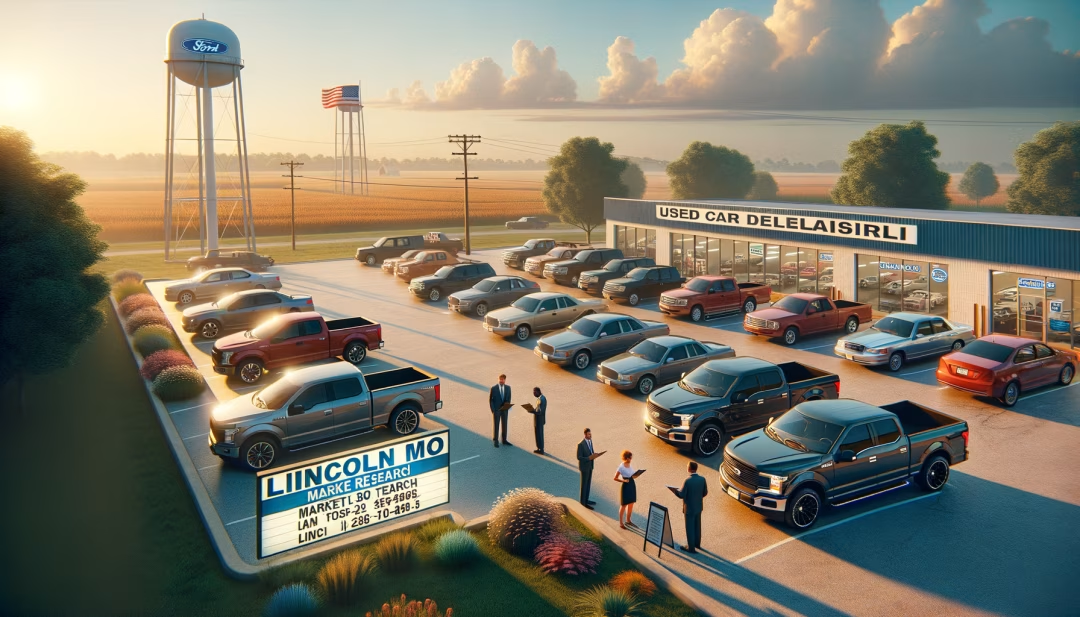
How to Use Local Market Research in Lincoln MO
The most confident used car shoppers in Lincoln Missouri combine live inventory checks, recent sold comparisons, and vehicle history details to determine a fair offer. This section outlines a practical, repeatable approach you can use before you test drive or negotiate. The goal is to reduce surprises, balance features with budget, and align the vehicle to your daily use and long term costs.
1. Understand the local mix of vehicles
Rural and small town Missouri markets often lean toward pickups, midsize and full size SUVs, and all weather crossovers, with steady demand for reliable sedans that deliver strong fuel economy. In Lincoln and surrounding communities, these preferences shape both availability and pricing. When a body style is popular locally, clean examples with documented service typically command stronger prices. If you are flexible on color, trim, and features, you may find value in models that are less in demand seasonally.
- Check current listings on used-inventory to see what is abundant or scarce this month.
- Compare actual transaction examples on sold-inventory for realistic price anchors.
2. Price ranges and the drivers behind them
Prices vary based on mileage, age, ownership history, accident records, trim, options, and reconditioning. A one owner vehicle with complete service records, newer tires, and recent brakes can be worth more than a similar model that needs immediate maintenance. Conversely, higher mileage highway vehicles in good mechanical condition may deliver great value if you plan to keep them long term. Avoid assuming a single statewide price. Micro markets matter. Your best reference point is the intersection of live asking prices and sold examples from the most recent 30 to 90 days in the Lincoln area.
3. Seasonality and timing
Seasonality influences inventory mix and shopper traffic. Trucks and 4x4 SUVs tend to be in higher demand before and during winter months. Compact cars and hybrids often gain attention when fuel prices rise. If your timeline is flexible, consider shopping during periods of higher inventory selection to improve your leverage. Use our research here together with blog posts for timing strategies.
4. Mileage and model year sweet spots
A practical sweet spot for many buyers is a model that is a few years old with mileage that averages around 10,000 to 15,000 miles per year and a clean maintenance record. This balance can preserve modern safety and tech features while avoiding the steepest early depreciation. If you drive fewer miles annually, a slightly higher mileage vehicle can still be a smart buy if it has strong service documentation and passes a thorough inspection.
5. Vehicle history, title status, and inspection
A vehicle history report, service receipts, and a detailed inspection tell the most valuable story. Look for consistent oil changes, timing belt or transmission services where applicable, and recent wear items like tires and brakes. Verify title status, VIN on all body panels where appropriate, and any recalls addressed by prior owners or a dealer. When in doubt, bring a trusted mechanic or mobile inspector to the lot. Your upfront diligence is often worth more than aggressive negotiation.
- Match the VIN on the dash, door jamb, and title.
- Scan for paintwork or panel gaps that suggest prior repairs.
- Confirm all keys, manuals, and accessories are present.
- Test electronics, safety systems, and infotainment thoroughly.
6. Total cost of ownership in Lincoln MO
Budget beyond the sticker. Factor taxes, registration, and potential emissions or inspection fees if applicable. Estimate insurance premiums for the VIN, not just the model. Consider fuel economy based on your route types and expected annual mileage. Finally, create a 12 month maintenance budget for fluids, filters, tires, and any overdue services you identified.
7. Financing choices, including options for credit rebuilding
The right financing structure should match your budget and ownership plans. Shorter terms typically reduce total interest but raise the monthly payment. If your credit history is developing or recovering, explore second chance programs designed for steady income and reasonable down payments. Prequalification helps you compare offers competitively, and it signals to sellers that you are ready to close.
- See local options on used-car-financing-lincoln-mo.
- Explore programs for credit rebuilding at second-chance-auto-financing-lincoln-mo.
8. Trade in strategy
If you have a trade, clean it thoroughly, gather maintenance records, and photograph it in good light. Obtain a few written buy bids to establish a floor price. Present your trade after you align on the sale price of the vehicle you want, then compare your offers. If the trade in value is below wholesale bids, you may choose to sell directly, but weigh the time and paperwork against the convenience of a same day trade.
9. Test drive and road feel checklist
A thoughtful test drive validates both mechanical condition and comfort. Recreate your daily route where possible. Bring a notepad, listen for noises, and check ergonomics. If anything feels off, pause and investigate before you proceed.
- Cold start test for idle quality and warning lights.
- Smooth acceleration, transmission shifts, and braking behavior.
- Steering tracking on a straight road and suspension over bumps.
- HVAC performance, defrost, and seat heaters if equipped.
- Parking maneuvers to test cameras and sensors.
10. Negotiation with data
Data driven negotiation is respectful and effective. Arrive with printed or saved comps from local listings and recent sales, a summary of reconditioning items, and your financing prequalification if you plan to finance. Aim for a fair outcome rather than a maximum squeeze. Vehicles with the best histories and reconditioned wear items tend to sell quickly at market price. Your advantage grows when you find a well maintained model with minor needs you can address economically after purchase.
11. Paperwork, policies, and transparency
Before finalizing, review bill of sale line items, title transfer details, temporary tags, and any dealer installed products. Confirm which items are optional and whether any protection plans are transferable or refundable per policy. For store policies and terms, see visitor-agreement and privacy-policy. If you have questions, connect through contact-us.
Compare nearby research pages
It can be useful to compare Lincoln area trends with neighboring Missouri counties. Reviewing multiple local guides helps you recognize where certain models are more available or where pricing is especially competitive.
Helpful links
Frequently Asked Questions
Keep researching with our guides
Continue your preparation with our expert articles at blog and step by step advice on car-buying-guide-lincoln-mo. When you are ready to review vehicles in person, browse used-inventory and circle back to this page to sanity check your short list. Careful research, honest inspection, and clear budgeting are the keys to a confident purchase in the Lincoln Missouri market.
Office Hours
Monday
Tuesday
Wednesday
Thursday
Friday
Saturday
9:00 am - 5:00 pm
9:00 am - 5:00 pm
9:00 am - 5:00 pm
9:00 am - 5:00 pm
9:00 am - 5:00 pm
Closed
